
 Français
The Artpreneur
Reyhane Namdari ~
Montreal Art Therapy
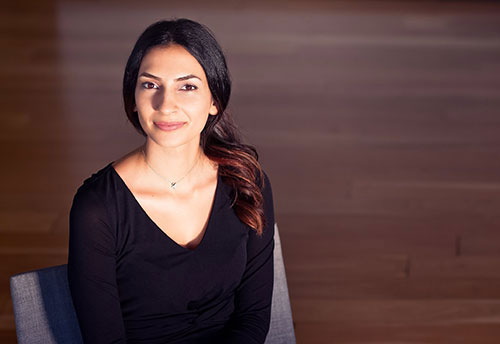 With locations downtown, on the South Shore and in Pointe Claire on the West Island, Montreal Art Therapy has been helping individuals heal through creativity for nearly 15 years. Recently we spoke with founder and Director Reyhane Namdari about the therapeutic power of art.
What are your personal roots?
I was born and raised in Iran and immigrated to Canada in my early twenties. I think having roots in one culture while building a life in another has shaped me in many ways, both personally and professionally. Montreal became an important part of that story, it’s where I studied, discovered art therapy, and eventually built Montreal Art Therapy Centre. Being an immigrant has also made me particularly aware of how culture, language and belonging shape the way we express ourselves and connect with others. Maybe that is part of why I was so naturally drawn to art therapy: creativity can communicate things that don’t always translate easily into words.
When and why did you first get into art therapy?
I first learned about Concordia University’s Art Therapy program in 2009, after completing my bachelor’s degree in psychology, and I started the program a year later. I was drawn to art therapy because of its ability to help people express themselves in creative ways, particularly when words are difficult or simply not enough. At the time, my focus was very much on child psychology, and I understood art and play as universal languages for children. What I discovered later was that creativity can be a language for expression and connection at every age. That realization has stayed with me throughout my career.
Are they the same reasons that you remain involved?
Absolutely. If anything, I believe in it even more now. Over the years, I’ve seen art therapy reach people who may not necessarily connect with traditional talk therapy. There is something very human about creating first and finding the words afterward.
What are the challenges of the vocation?
One of the biggest challenges is that art therapy is not a regulated profession in Quebec, which can make services more difficult to access. Government-funded organizations and public institutions such as hospitals and schools can sometimes face more barriers when approving funding for art therapy compared with professions such as psychology, counselling or social work. There has been encouraging progress. In recent years, we’ve seen more insurance companies, universities, schools, healthcare settings and community organizations recognize and incorporate art therapy. The field is becoming more visible, but there is still a lot of work to do when it comes to awareness, recognition and accessibility.
What are the rewards?
One of the greatest rewards has been seeing art therapy welcomed into so many different environments. Over the years, we have brought services into schools, First Nations communities, rehabilitation centres, seniors’ residences, community organizations and government-funded programs, tailoring individual and group sessions to the needs of each population. Seeing a child, teenager, adult or senior discover that there is another way to communicate what they are experiencing is incredibly rewarding. It is equally meaningful to see people from very different cultures, generations and walks of life connect with the process in their own way.
 When and why did you start Montreal Art Therapy Centre?
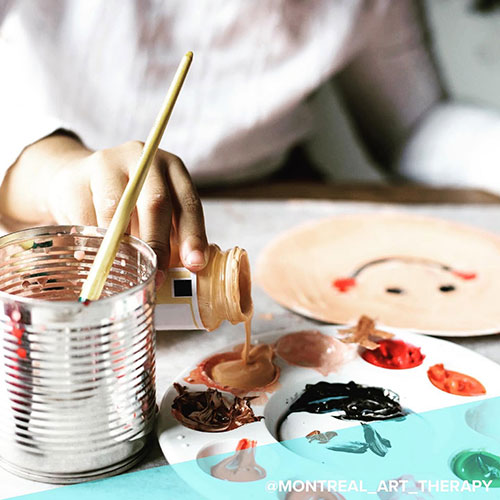
I founded Montreal Art Therapy Centre in 2012, after completing my MA in Art Therapy at Concordia University. At the time, I noticed a gap in private-sector art therapy services. The need was there, but people often didn’t know where to find an art therapist or how to access the service. I wanted to make art therapy easier to find and more accessible outside of settings where people might encounter long waiting lists. What began as a small practice gradually grew into a larger team serving individuals, families and organizations in Montreal and beyond.
What is the company’s core mandate?
Accessibility. That has really been at the heart of Montreal Art Therapy Centre from the beginning: making mental health services easier to access and creating different pathways into therapy. Not everyone connects through words in the same way, and we want people to have options.
Who are your clients?
Our clients range from young children to seniors and come from many different cultural, linguistic and socioeconomic backgrounds. We work with individuals, couples and families, as well as schools, organizations and community programs. An important part of our work has also been providing services to Indigenous communities, including Cree, Inuit and Mohawk communities. Our therapists travel to communities, while other services are provided virtually or through partnerships with schools and organizations.
What are they looking for?
If I had to summarize the needs we see most often into five broad areas, I would say:
emotional regulation, adverse childhood experiences and trauma, attachment and relationship difficulties, anxiety and depression, and support through major life transitions. Of course, every person comes with their own story. Sometimes someone arrives knowing exactly what they want to work on, and sometimes the first part of therapy is simply figuring that out together.
What kind of feedback do you get from them?
Sometimes the loudest feedback is simply that people keep coming back, session after session, and sometimes year after year when they need support again. The feedback also looks different depending on the age group. Little ones have referred to their art therapist as their “emotion doctor,” which I love. Teenagers and adults sometimes return for occasional check-in sessions after finishing regular therapy. In some of the Indigenous communities we work with, we have heard about children developing stronger emotional-regulation skills and becoming better able to identify and express what they are feeling.
What are your thoughts on the current state of the arts in Montreal, and specifically the West Island?
Montreal has always had an incredibly rich creative identity. What I find exciting is seeing the arts increasingly intersect with wellness, mental health, education and community building. Creativity does not have to exist only in galleries or traditional arts spaces. It can also become a way for communities to connect and care for themselves. In the West Island, I would love to see even more opportunities that bring those worlds together: accessible creative spaces, community programming, workshops and collaborations between artists, therapists, schools and local organizations. There is a lot of potential here.
What advice might you have for younger creatives looking to have a career in the arts?
Stay curious about where your creativity can take you. A career in the arts does not have to follow one traditional path. I started with psychology and art therapy and eventually found myself building a business, working with schools and communities, collaborating with organizations, supervising other professionals and thinking about how creative approaches can reach people in entirely new ways. I would also say learn the business side of your creativity. Talent and passion matter, but understanding how to communicate your work, build relationships, manage finances and create opportunities for yourself can give your creativity a much longer life. And don’t be discouraged if your path doesn’t look like anyone else’s. Mine certainly didn’t.
 How has the internet, social media, and/or AI affected what you do?
The internet and social media have helped the field grow tremendously because art therapists are much more visible than they were when I entered the profession. People can now discover what art therapy is, see examples of how creativity can support mental health, and find practitioners much more easily. Technology has also allowed us to provide virtual services to people who might otherwise have very limited access to art therapy, including clients living far from major urban centres. AI is newer territory, and I think we are still discovering what its role should be. For me, the interesting question isn’t how technology can replace the human or creative parts of therapy, but how we can use it thoughtfully to make services more accessible, reduce administrative barriers and give clinicians more time to focus on the human connection.
What does the company have on tap for the rest of 2026, and going into 2027?
We are thinking about the next chapter of Montreal Art Therapy Centre as something broader than a traditional therapy practice. Our vision is to gradually develop a community of services around creativity, mental health and well-being. That means continuing our individual and group work while exploring more workshops, community programming, partnerships, professional education and creative wellness resources that can reach people beyond the therapy room. After more than a decade of building the clinical side of MATC, I’m excited about asking a new question: How can we take what we’ve learned and make it accessible to even more people? That is where I see us heading in 2027.
montrealarttherapy.com
@montreal_art_therapy