
 Français

Sounds
Justin Saladino
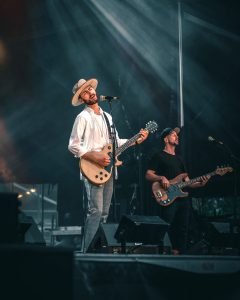
Born in Anjou and raised in Pierrefonds, guitarist Justin Saladino has never forgotten his geographic or musical roots.
“There must be something in the water out there on the West Island,” smiles the soft-spoken six-stringer from his current residence in Verdun. “I mean, I knew so many people who played the guitar or another instrument or sang in bands when I was growing up. It is definitely a very creative part of Montreal.”
As a youngster, Saladino followed in his family’s musical footsteps. “My dad played as a hobbyist and still does, and my uncle played professionally for many years. I picked up my dad’s guitar at the age of six, and my parents gave me my own junior classical guitar that Christmas. I took to it right away and started taking lessons with my uncle almost immediately.”
His earliest musical influences also came from his father. “He is a huge Led Zeppelin fan, and I listened to a lot of Jimmy Page as I was learning the guitar. I also heard tons of AC/DC, Black Sabbath, Deep Purple – classic rock that is rooted in the blues. “Oh, and by the way” he adds, with a chuckle, “those bands aren’t what we call ‘Dad Rock’ – they are ‘Classic Rock’. Those are two entirely separate things – just throwing it out there!”
Regardless of the moniker, Saladino soon discovered Jimi Hendrix and began exploring the roots of rock ‘n’ roll.
“Hendrix opened my ears to old-school bluesmen like Muddy Waters, Buddy Guy and Lightning Hopkins, which eventually led me to Stevie Ray Vaughan. But I would listen to anything and everything I could back then, even if it wasn’t guitar related. “One of my favourite players and artists is John Mayer, whose sound feels like the coming together of some of my favourite influences of the 20th century reinterpreted for the 2000s.”
After studying music at Vanier College, Saladino furthered his sonic studies at McGill.
“Truth be told, I didn’t finish university because I wanted to make albums and practice my singing and work on slide guitar and stuff. Theory is essential, absolutely, but if there isn’t some sort of practical application of those ideas – if you’re not out there rehearsing and writing and performing music – then they are just ideas.”
True to word, Saladino’s Do-It-Yourself philosophy resulted in several albums over the ensuing years, including No Worries, A Fool’s Heart, JSB Live and Honest Lies. He has also performed at the Tremblant International Blues Festival, the Montréal International Jazz Festival, the Keeping the Blues Alive at Sea cruise, and has shared the stage with blues-rock giants Joe Bonamassa, Ariel Posen and Steve Hill.
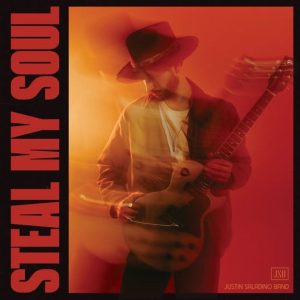 That DIY approach again served him well during the writing and recording of his latest album, Steal My Soul.
“It was very different from everything that I had done up until that point,” he notes. “I had always done things in the classic way; going into the studio, having a producer and getting as much done as possible in 2 or 3 days. With this recording, we took our time. I self-produced it with help from my engineer Dominic Carbone at a home-based studio in Laval. I had a bunch of songs ready after the last album came out, and so I just put those demos in the headphones and tracked the bass and drums at the same time to give it a real live vibe. Then we overdubbed the guitars and vocals and other instruments. It has a real live-off-the-floor feel and energy to it and it really captures the essence of the band’s sound.”
“I’ve always wanted to make a blues album that brings together the influences that shaped me, exploring different corners of the genre while still speaking with my own voice.”
Showcasing Saladino’s slide guitar skills, layers of acoustic guitars and mandolin, and featuring harmonica from Steve Marriner and guest vocals from Beaconsfield’s Brittany Kennell, the nine-track Steal My Soul is an energetic and eclectic collection of old-school blues rock, Texas shuffle, R’n’B/funk grooves, and a slowburn ballad also makes a guest appearance.
Released independently, the record is available on all major streaming platforms.
So far, response to Steal My Soul has been excellent. “A lot of people have said that I sound like myself on this record, and I also feel like I have found my own voice as both a singer and as a guitar player, as if all my past influences have converged to create some sort of signature sound that is distinctly my own. Yeah, I’m really pleased with how it all came together.”
justinsaladinoband.com
@justinsaladinoband
—————————————————————-
Rad Crasto
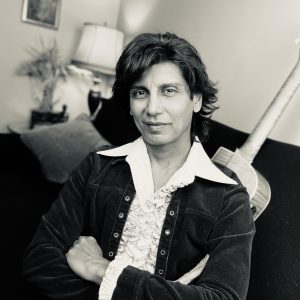 He might be the busiest man in local rock ‘n’ roll, but Rad Crasto takes it all in stride.
“As a freelance artist, I perform with a number of different bands and I have a lot of shows booked through to the end of 2026,” shares the easy-going guitarist via email from his home in Les Cedres. “And I also have to finish a few albums that I am currently producing and recording.”
As with many musicians, it all started with the Beatles.
“I later discovered different 1960s and 1970s artists such as Jimi Hendrix and Led Zeppelin. I think the two groups that really sparked my interest in music after the Beatles were Styx and Kiss. Van Halen also. I then explored a lot of progressive groups, including Rush, Yes, King Crimson and Genesis. These days, I listen to a lot of world music, but those early influences remain.”
Interestingly, Crasto’s musical journey began with family encouragement, though perhaps not in the traditional manner.
“I initially started playing guitar because my father wanted me to learn an instrument so that I could play with some of his friends who used to jam at house parties. I quit my lessons after a few months but then picked up the guitar on my own as I discovered groups that were being played on the radio. I then reinitiated my lessons and studied with numerous other teachers.”
His evolution as a musical artist has taken many turns over the years.
“The first step in my evolution would be on a skill level, as I have gotten better as a guitar player. However, I am a multi-instrumentalist as well, so I have been slowly evolving on other instruments, including keyboards, drums, bass, as well as numerous world instruments like the sarod and sitar. On another level, my songwriting abilities have also greatly improved which would be substantiated by the fact that a couple of my songs were placed in some Hollywood films. My skills as a music producer have also grown in the last decade while working on other artists’ albums.”
Despite the diversity, or perhaps because of it, Crasto says that his reasons for remaining in music are mostly the same.
“The passion for music is still there, but one of my main purposes in life is to be able to create and share music with other people. I believe that it is my Dharma to spread joy and happiness through music.”
“In my opinion, a good melody – with an honest and pure delivery – is always the foundation of a great song. Things like mood and groove are also important but, ultimately, it comes down to the melodic hooks and lyrics.” Similarly, a good live show sees the sum greater than the individual parts. “I think charismatic performers are the key ingredient for a good live show. Obviously, a good repertoire and delivery are needed as well, but the ability to connect with an audience on a certain level is extremely important. And the gratification that a musician receives when an audience applauds after a performance is extremely satisfying and rewarding.”
Crasto has been blessed to have many career highlights, including some early on in his career.
“Winning the CHOM L’Esprit competition with my group Cinema V and then going on to win the Rock Showdown ‘89 which crowned us “best band in Canada” was certainly a highlight. Working at CHOM on the weekly ‘Stump The Guitarist’ show with Paul Beauregard was also really fun for the five years that we did it in the 1990s. And it was certainly a highlight and an honor to work with so many talented Canadian musicians including Gino Vannelli. But whether they are big names or local heroes, it has been amazing to collaborate with so many talented artists.”
Many of those talented artists, he adds, are right here on the West Island.
“I have been very encouraged in the last couple years to see the West Island music scene flourishing, albeit to a small degree. Things were very bleak during the COVID-19 pandemic, but thankfully things are now getting back to thriving levels. Audience support has been quite consistent here, and that helps a lot.”
And while the local music scene is steady, there is always room for growth.
“It would be great to see more venues cater to original music artists. And a higher pay rate for musicians would also help greatly – pay scales in the West Island have not changed much since the 1980s, although that hasn’t been the case for other parts of Montreal and Quebec.”
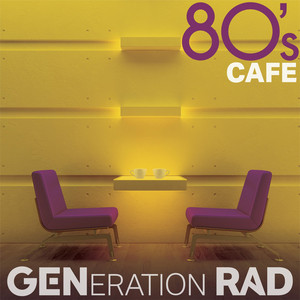
In the meanwhile, Crasto shows no signs of slowing down anytime soon. “I am finishing the latest Generation Rad ‘90s Cafe album to complement our ‘70s Café and ‘80s Café albums, and – finally – I am completing a solo album which will feature only original material that will, hopefully, come out in 2027 – if the schedule cooperates. For now, I’m just taking it all in stride.”
—————————————————————-
Rachel Dara
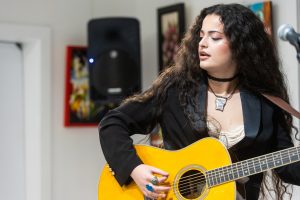 Pinning down a time to chat with Rachel Dara isn’t easy.
“Oh, the past while has just been crazy,” shares the 20-year-old singer/songwriter via Zoom. “Between school and music and trying to have some semblance of a social life my schedule has been really full. I’m just trying to keep everything balanced as best I can.”
Balance was preached early on in Dara’s life.
“I come from a very educated family, and I have always been academically inclined. My parents have supported my music from the start, but they also encouraged me to stay in school to be sure that I have other career options to fall back on. And I totally agree, because – as I am seeing for myself right now – being a musician isn’t easy.”
Her decision to study Psychology at Marianopolis College was completely her own.
“I’m very passionate about helping people and understanding the human brain, and music goes hand-in-hand with that. I’m currently writing my integrative project – which every last-semester student in CEGEP must do – and I am researching the correlation between musicians and addiction. So, I am living a bit of a double life these days, but the two topics dovetail into one another, so it is working for me.”
Interestingly, Dara does not come from a musical family.
“When I was four, I begged my parents for music before I went to sleep and they would play opera CDs; Jackie Evancho, Andrea Bocelli, and all these soulful opera singers. And my dad would sing Spanish Train by Chris de Burgh to me almost every night, which was my first introduction to storytelling in music. So, that’s what I do now. “I am probably more of a storyteller than a musician…”
She also found inspiration in some unorthodox places.
“Alvin and the Chipmunks,” she giggles. “Yes, you heard that right. I went through a huge Chipmunks phase, and I watched all these clips of them in studio songwriting, producing music, and having a music career. It was the first time that I was exposed to musicianship and music careers and the dynamics between musicians.”
Inspired by her newfound furry friends, Dara did what any 6-year-old would do.
“I tried writing music, and it was terrible,” she recalls with a laugh. “Yeah, then I put that aside – kids go through phases, right? Well, it turns out it wasn’t a phase and I begged my parents for guitar lessons, which they gave me for my ninth birthday.”
After parting ways with her guitar instructor after a year of lessons, Dara started learning on her own.
“I taught myself how to play guitar and the ukulele, and I was writing music almost every day. I began performing solo at the age of 12, and I practiced a lot because I always wanted to be on stage as a solo artist. I had been acting for five or six years by that point, so I sort of knew how to prepare for a performance. But I spent so much time on stage as someone else that I didn’t know how to be myself. So, I became Rachel Dara, but I was also trying to figure out who Rachel Dara was, and, I guess to some degree, I still am.”

Just as she was settling into her new self, along came COVID-19.
“I was so frustrated,” she admits. “So, I started doing these online shows that I called COVID concerts every Saturday at a certain time. At first, almost nobody showed up. I continued to write new music and put on these shows and, eventually, people started checking out the shows. At one point I had over 14,000 people watching on Facebook Live, and I started getting media coverage. To me, those were signs that I should keep doing it.”
Since then, she hasn’t stopped doing it, writing, recording and performing whenever and wherever she can.
“Social media is a huge part of what I do now as well,” she notes. “It’s essential as an artist these days, but it kind of presents an interesting dilemma; on one side, there’s never before been the opportunity to reach as many people with music as there is now, while on the other side sites like Facebook, Instagram, etc. are filled with so many artists sharing their music, and it’s unfortunately become quite competitive.”
While Dara shows a business acumen wise beyond her years, she is – at the end of the day – an artist.
“I love all of it; touring, performing, meeting people in the industry and other artists, but my favourite moments are when I take a few minutes out of my crazy schedule and curl up with my guitar. It’s taken time, but I’m finally finding some balance.”
racheldara.com
@racheldaramusic
—————————————————————-
Rob Lutes
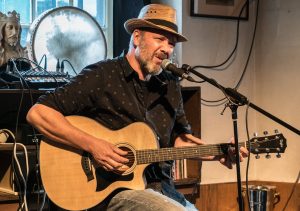 Rob Lutes remembers discovering the joy of music as a youngster.
“My mother’s family are from Ontario, and they were very musical,” shares the 50-something songsmith over the phone from his home in Pointe Claire. “She played the piano and there were always these pleasant melodies floating around the house. I was the youngest of six kids, but the only one to pick up a musical instrument. I took piano and ukulele lessons as a child, but everything changed after I found a guitar tucked away in my sister’s closet. Making sound come out of it brought me no end of happiness.”
Although Lutes’ siblings didn’t share the same penchant for playing, they were instrumental in informing his early musical tastes.
“They were all older than me by a few years and had all these records – 45s mostly. When they went off to school I’d run downstairs and put them on our little stereo and just sit there captivated by the Beatles, the Stones, Dylan, Neil Young, Sinatra, and even country music. My love for songwriting, for the craft of songwriting, came out of those experiences.”
Unbeknownst to him at the time, Lutes would eventually carve a career out of that craft himself.
“I have written, recorded and released eight of my own albums and three with another project. I have been on the road a lot as well; Canada, the U.S., and I have toured Europe about 15 times. I still tour here and there, but I have three kids now, so my priorities have changed and I’m happy to be home.”
Domesticity hasn’t seemed to slow Lutes down however; along with regular performances, he instructs students on music history and Tin Pan Alley at the Thomas Moore Institute near Atwater and conducts a Summer Songwriting Series at Cedar Park United Church in Pointe Claire.
He is also currently teaching songwriting at Concordia University in downtown Montreal.
“I have 60 students and it has been very inspiring. They are in that zone when everything is still fresh, and some of them don’t have the ‘guardrails’ in place yet. They aren’t censoring themselves or adhering to some pre-existing musical formula. And for me, as a songwriter, it’s good to get out of my comfort zone and hear music with fresh ears.”
He often talks with his students about the use of technology in modern music making.
“I’ve done workshops where people have put lyrics into an AI program to create a song and they have been revealing; what comes out sounds smooth and professional, but it clearly lacks heart. Think of Wabi-Sabi, the Japanese concept of finding beauty in life’s imperfections – AI can’t get something like that quite right. That is because being imperfect it a distinctly human experience. Songs breathe and come to life in those little mistakes, in those moments.”
A good song, he says, should be simple.
“Personally, I like it when a tune sticks to one topic; maybe it’s a love song, or a breakup song, or a song about losing your dog, or whatever – something specific that connects with listeners easily. As artists, we are graciously given a certain amount of real estate in a listener’s brain, and we are asking them to devote their neurons to what we are doing, so we should always be respectful of that. And a good song should be able to stand on its own with just a lone voice and guitar or piano, stripped of all production. The architecture of the song, the engineering behind it, must be sound. In the end, though, it is a matter of opinion; what is beautiful to me might not be beautiful to someone else…”
One thing that all musicians and music fans can agree upon is that the music industry has changed greatly over the past quarter century.
“The business model that I came of age with – record labels, management companies and touring agencies funding and supporting artists and bands in the studio and on stage – is gone for good. Nowadays, a musician must be a jack-of-all-trades; artist, accountant, label, manager, agent, promoter, publicist. It’s a full-time job to run the show.”
Despite those challenges, Lutes believes that the rewards make it all worthwhile.
“I have a friend who runs a design company in London, and we were discussing creative work one day. He said to me, ‘we’re not doing this to make money – we’re doing this to make beautiful things.’ And that hit home. Ultimately, writing, recording and performing music has to bring you no end of happiness or it simply isn’t worth doing.”
roblutes.com
@lutesrob
—————————————————————-
Dwane Dixon
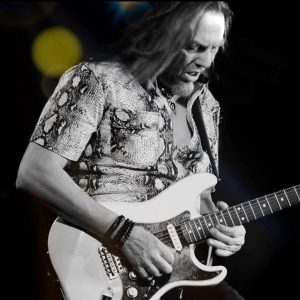 Growing up on Montreal’s South Shore in the 1970s, Dwane Dixon fell in love with music.
“I listened to a lot of pop radio, and CKGM was my mainstay,” shares the 61-year-old six-stringer over the phone with Arts Ouest. “My father and I would buy those K-Tel records with all the big hits. But the real wake-up for me was hearing the KISS Alive! album when I was 10 years old; it hit me like a bolt of lightening. I wanted to be (KISS guitarist) Ace Frehley – I still do.”
Interestingly, Dixon ended up in music via a process of elimination.
“We had a saying in Châteauguay back in the 1970s,” he laughs, ‘you got into sports, you got into music, or you got into trouble.’”
It didn’t take long for the youngster to make up his mind
“I started off on the drums, and I hooked up with some other guys my age and we started jamming in someone’s basement. I switched to guitar at the age of 12, and by 13 I was playing in my first real band.”
Dixon soon discovered the era’s great blues-rock guitarists, including Duane Allman, Jimi Hendrix, Billy Gibbons, and Jimmy Page. Since then, he has written and recorded six albums – including four of all-original songs – performed thousands of concerts across several continents, and…went back to school.
“I did a Bachelor of Fine Arts in music at Concordia University,” he recalls. “I spent four years studying theory and composition, learning how to read and write and analyze great pieces of music. I wanted to understand how music works on a very deep level. It certainly opened my ears to a much wider spectrum of sounds – artists like John Cage and Philip Glass. Some of that stuff I can appreciate intellectually – seeing the structure behind how they compose and arrange songs and sounds – but I don’t know how much I actually like it. School was a gamechanger for me though.”
Another gamechanger, he notes, has been the advent of AI usage in music.
“It is evolving so quickly that there is already a fair amount of people that can’t tell the difference from real music. I can – I can smell it. As soon as I hear the voice or see the video I know its AI. However, the models are evolving so quickly that within a few short years nobody will be able to tell the difference, except very sophisticated listeners. Even now, 99 per cent of people might tell you that they won’t listen to AI-generated music, but they are already doing so without even realizing it.”
Retaining musical authenticity is a large part of why Dixon continues to perform live, including his regular gigs on the West Island.
“I am honorary West Islander,” he grins. “My sister moved to the West Island in the early 1970s, and I lived there for a while. In fact, I play so often out there these days that my car knows the way by itself – it knows the grooves in the road – I don’t even need to drive.”
As long as people keep coming out to shows, he will keep coming back
“The West Island, per capita, has some of the best live music anywhere in the Montreal area. There are very few places that have as many live music venues, and people there are very supportive of the arts generally. I started playing heavily on the West Island in 2010 and it is still one of my favourite parts of the world to perform – I always have a great time.”
His audience appreciates the diversity of his live performances.
“Although I play original music and have several albums out, I still perform cover tunes because that’s what people want to hear and, well, that’s my day job – my Walmart job. And it’s better for me than having an actual Walmart job. I made the decision a long time ago that I wasn’t going to be a purist who only plays original music and gigs occasionally, and my philosophy was simply that I’d rather be playing music for a living and keep getting better at it than jumping from lame job to lame job.
“I am at a point in my life, being the age that I am at, where I simply want to create art for art’s sake. I am going to keep doing what I am doing, but the next music that comes out will be for me with no consideration for the business side of things. When you’re putting in monetary and marketing considerations, it colors the music a little bit. I am still in love with music.”
dwanedixon.com
@dwane_dixon_music








