
 Français
Cover Story
David McMillan
and the Art of Coming Home
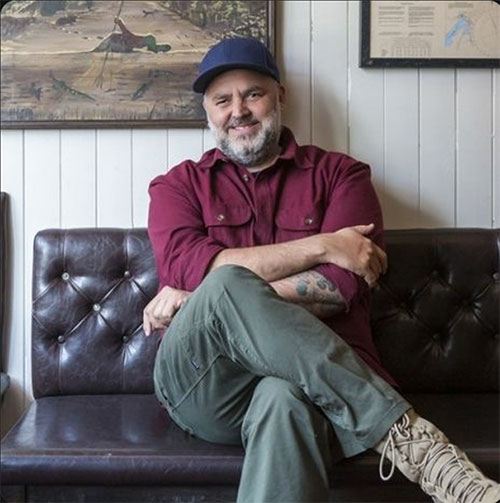 He’s opened an array of critically acclaimed restaurants (including Montreal mainstays Joe Beef, Liverpool House, Vin Papillon, McKiernan Luncheonette, and his latest venture Grille Nature in Dollard-des-Ormeaux, which he co-owns with his “favourite chef” Derek Damann), written two bestselling books, created products that are sold in grocery stores around the world, travelled extensively, and hobnobbed with the likes of Barak Obama, Justin Trudeau, Anthony Bourdain, and other newsworthy notables.
David McMillan is happiest, however, when he is home with his family on the West Island or when he is toiling the fields at his Hayfield Farm.
“I grew up in Pointe Claire and went to John Rennie High School,” shares the multi award-winning chef. “I moved back here a few years ago and opened Grille Nature last fall. So, it has been a homecoming of sorts for me.”
Now, at 56, McMillan – who moved on from Joe Beef four years ago – finds the area’s leisurely pace comfortable and better suited to this phase of his life.
“To be honest, it has been great not having any kind of pressure on me anymore and to feel like I am just another member of the community here. There is a a real sense of familiarity, and it has been very gratifying getting to know my neighbours and the shopkeepers in Pointe Claire, or to run into people that I went to school with. And we have settled in quite well; my wife teaches at Collège Saint-Anne, and my children go to school nearby.”
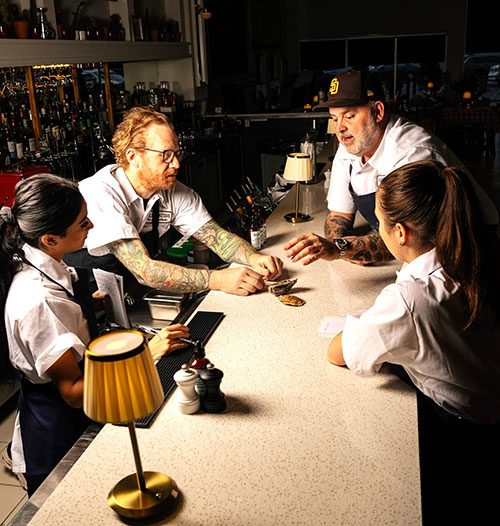 It is also where, as a youngster, McMillan first developed a taste for cooking.
“It was my grandmother who got me into it,” he recalls with a smile. “She was an exceptional cook and kept a fine kitchen. Almost every day she would spoil me with all sorts of homemade goodies.”
Pursuing that passion as a teenager, McMillan soaked up television food and cooking programs, later gaining invaluable hands-on experience washing dishes at Le Péché Mignon restaurant in Sainte-Anne-de-Bellevue. Soon after, he studied at the Institut de tourisme et d’hôtellerie du Québec.
“Learning the basics was essential,” he says. “The fundamentals are the fundamentals, and without them you’re going nowhere fast. However, without real-life experience all the classes in the world won’t amount to much. My most valuable lessons came later from working alongside real chefs in real time.”
Perhaps influenced by his old-school mentors, and despite the exploding popularity of food culture in recent years, McMillan is not much for the term ‘culinary arts.’
“I have kind of fought against that my whole life,” shares the chef. “To me, it’s nothing but a very skilled trade. The amount of creativity that we use is little to none. There should be no creative discussions going. This might go against the grain of what a lot of people think, but I am saying this after 35 years into my career. I’m an artisan – and that is all I am – that respects the classics and tries very hard to stay within the parameters of a skilled trade. I’m not here to rewrite the book on the 50 desserts that we do, or the 50 appetizers that we do, or the 50 main courses that we do.
“Look, there is classic beef cookery all over the planet,” he continues. “To deviate from traditional beef cookery – to be creative with beef – is foolish. There are 30 to 40 recipes for rabbit – we don’t stray away from that. There’s no way I’d ever start coming up with creative things to do with rabbit. There’s no art to that. We respect the product, first and foremost. Basically, we serve it with the vegetables that it would eat – that always makes the most sense.
“So, in that regard, the recipes write themselves…”
McMillan adds that he may have more in common with someone who builds chairs than a young chef who believes he is creative.
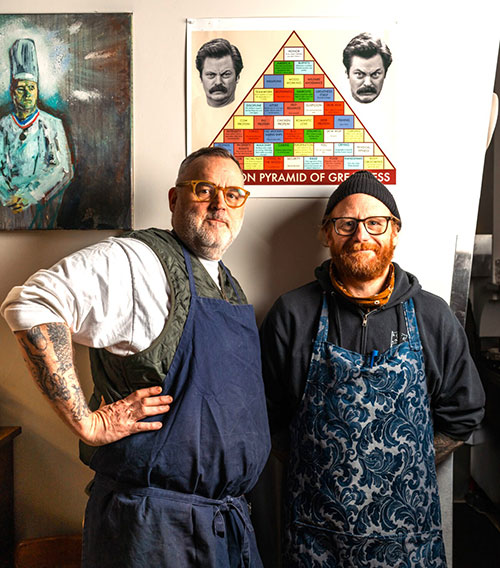
“I maybe considered myself creative in my younger years when I thought that I was coming up with things that were new. It took me a long time to figure out that no, it is better to stick very closely to the cookbook that was written hundreds of years ago. Go with the basics; salt is still there, butter is still there, olive oil is still there.
“Halibut with a mango salsa – probably very delicious, but, academically, it is absolutely ridiculous to do. You might love eating it, and it might be wonderful for you, but I see that as perversion or deviance outside of the rules of classicism. There’s no art to that. Respect the fish.”
As such, he believes that culinary creativity may very well be the antithesis of good taste.
“I have friends who earn big money being artists, but there isn’t an ounce of creativity to what they do. A skilled artisan who has been painting trees for the better part of 50 years has an aesthetic and a skill and an ease to paint that only comes with putting in 100,000 hours. So, when you get these younger people coming into the industry looking to change the menu, it doesn’t happen with me; they are in the wrong place. But I see it going on downtown, especially now with Instagram.”
As with other industries, social media has had a major impact on the food sector.
“Now I can see what every chef in Spain, Alaska, China, and Mongolia is doing. It has really opened this can of worms. It is an incredible amount of visual food to look at. But these different cultures and the way that they cook are always based on their own classicism. Turkish food is Turkish food. Persian food is Persian food. Japanese food is Japanese food. There is no drawing outside of the lines on high-end Japanese food. It is a cuisine and culture that is thousands of years old, and which leaves very little room for creativity or interpretation at all. So, when it comes to something like American or English or French steak cookery, keep it simple; salt and pepper, fire and charcoal, and butter and cast iron – there’s not much more that you can bring to it than that.”
The key to great cuisine, he notes, are the ingredients.
“We start off with the best materials possible; buy the best beef from super-skilled artisans that are amazing at raising specific beef. Same for the best shrimp, the best beef veal pig. Cooking is just basically pushing it along its way through the food chain.
“One of the reasons that I moved back to the West Island and opened a restaurant here after I said that I’d retired four years ago is because I no longer wanted anything to do with the downtown or North American culinary establishment. I just want to practice my trade here in this space by myself with my team. I just want to cook here with my team in the kitchen and be left alone to my own devices. This is my trade and my job.
“Plumbers don’t hang out with other plumbers and give each other plumbing awards and follow each other on Instagram. Neither do electricians and neither do lawyers. It took me a long time to figure out that the most exhausting part of my career was the maintaining of relationships with other people from the trade. I don’t care about the trade. The only way I care about this trade is how it applies to me, my family and the people that work with me. If this restaurant was on a deserted island, I’d be fine with that so long as I had customers.
“I always fantasized about coming back to the West Island. It is a great and diverse community now, and there is a little bit of everything; Anglos, Francophones, Jewish, Arabic, Greek, Italian…
“I’ve opened many restaurants, but the amount of love that I’ve gotten here has been ridiculous. People walk in the door, and they want to meet me right away or hug me and say thank you so much for opening a restaurant on the West Island. And when you open a restaurant, it is important to keep your ear to the ground and let the people guide you -and folks here have guided us. We rewrote the menu a little bit for this audience, and the audience keeps on surprising me. I sell stuff here that I couldn’t sell downtown like 50 years ago. I have customers asking me for calf liver. I can sell stew here, and braised meat, and rabbit. West Islanders know their food, and they are very appreciative of what we do.
“As I said, it has been a homecoming of sorts for me.”