
 Français

Dwane Dixon
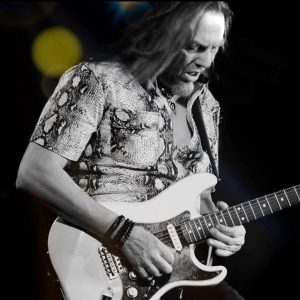 Growing up on Montreal’s South Shore in the 1970s, Dwane Dixon fell in love with music.
“I listened to a lot of pop radio, and CKGM was my mainstay,” shares the 61-year-old six-stringer over the phone with Arts Ouest. “My father and I would buy those K-Tel records with all the big hits. But the real wake-up for me was hearing the KISS Alive! album when I was 10 years old; it hit me like a bolt of lightening. I wanted to be (KISS guitarist) Ace Frehley – I still do.”
Interestingly, Dixon ended up in music via a process of elimination.
“We had a saying in Châteauguay back in the 1970s,” he laughs, ‘you got into sports, you got into music, or you got into trouble.’”
It didn’t take long for the youngster to make up his mind
“I started off on the drums, and I hooked up with some other guys my age and we started jamming in someone’s basement. I switched to guitar at the age of 12, and by 13 I was playing in my first real band.”
Dixon soon discovered the era’s great blues-rock guitarists, including Duane Allman, Jimi Hendrix, Billy Gibbons, and Jimmy Page. Since then, he has written and recorded six albums – including four of all-original songs – performed thousands of concerts across several continents, and…went back to school.
“I did a Bachelor of Fine Arts in music at Concordia University,” he recalls. “I spent four years studying theory and composition, learning how to read and write and analyze great pieces of music. I wanted to understand how music works on a very deep level. It certainly opened my ears to a much wider spectrum of sounds – artists like John Cage and Philip Glass. Some of that stuff I can appreciate intellectually – seeing the structure behind how they compose and arrange songs and sounds – but I don’t know how much I actually like it. School was a gamechanger for me though.”
Another gamechanger, he notes, has been the advent of AI usage in music.
“It is evolving so quickly that there is already a fair amount of people that can’t tell the difference from real music. I can – I can smell it. As soon as I hear the voice or see the video I know its AI. However, the models are evolving so quickly that within a few short years nobody will be able to tell the difference, except very sophisticated listeners. Even now, 99 per cent of people might tell you that they won’t listen to AI-generated music, but they are already doing so without even realizing it.”
Retaining musical authenticity is a large part of why Dixon continues to perform live, including his regular gigs on the West Island.
“I am honorary West Islander,” he grins. “My sister moved to the West Island in the early 1970s, and I lived there for a while. In fact, I play so often out there these days that my car knows the way by itself – it knows the grooves in the road – I don’t even need to drive.”
As long as people keep coming out to shows, he will keep coming back
“The West Island, per capita, has some of the best live music anywhere in the Montreal area. There are very few places that have as many live music venues, and people there are very supportive of the arts generally. I started playing heavily on the West Island in 2010 and it is still one of my favourite parts of the world to perform – I always have a great time.”
His audience appreciates the diversity of his live performances.
“Although I play original music and have several albums out, I still perform cover tunes because that’s what people want to hear and, well, that’s my day job – my Walmart job. And it’s better for me than having an actual Walmart job. I made the decision a long time ago that I wasn’t going to be a purist who only plays original music and gigs occasionally, and my philosophy was simply that I’d rather be playing music for a living and keep getting better at it than jumping from lame job to lame job.
“I am at a point in my life, being the age that I am at, where I simply want to create art for art’s sake. I am going to keep doing what I am doing, but the next music that comes out will be for me with no consideration for the business side of things. When you’re putting in monetary and marketing considerations, it colors the music a little bit. I am still in love with music.”
dwanedixon.com
@dwane_dixon_music














